
About Us
What we do
Aspen specializes in terrestrial and aquatic baseline environmental assessments, environmental effects monitoring and Species at Risk (SAR) assessment and permitting. We provide biological support during the baseline, impact assessment, construction and operations, and decommissioning phases of a project’s life cycle. Our main focus has involved Species at Risk baseline screenings, habitat assessments, surveys, mitigation, monitoring, and permitting within boreal ecosystems. We have provided biological support for over 80 projects supporting all levels of government, mining, oil and gas, hydro-electric, wind, linear infrastructure, military installations and renewable energy projects across Canada and the United States.
Our Mission
Our mission is to support our clients in achieving their goals while fostering environmental stewardship, informed decision-making, and a commitment to building long-lasting relationships with our clients and partners with honesty and integrity.
Let’s Work Together
Our Team
The Aspen team is composed of skilled, collaborative, and trusted biologists with extensive field and regulatory expertise. We partner with clients to deliver innovative, practical solutions tailored to diverse environmental challenges. Our strength lies in our hands-on field experience and the strong professional relationships we have built across industries. Dedicated to advancing sustainable development, we bring the knowledge, precision, and commitment needed to support projects of every scale.
Our Skilled Professionals
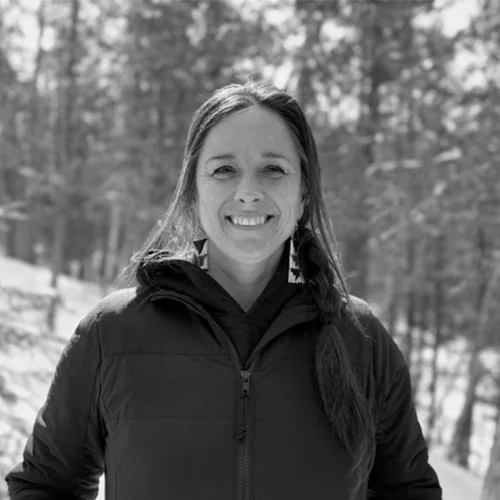
Lindsay Spenceley
H.BSc. Principal, Senior Biologist
Lindsay has an Honours Bachelor of Science from Lakehead University. She is a biologist with 25 years of experience across North America, specializing in Species at Risk and terrestrial and aquatic baseline Environmental Assessments and post-development monitoring. Lindsay has provided biological support for over 80 projects during the EA, construction and monitoring phase for hydroelectric, mining, solar, wind, transmission and development projects. Her broad field experience ranges from benthic invertebrate taxonomic identification and Lake Sturgeon spawning surveys to avian point counts and aerial surveys for ungulates and carnivores. Ms. Spenceley’s main professional focus has involved Species at Risk research, surveys, habitat assessments, mitigation and permitting. This includes dozens of sensitive, special concern, threatened, and endangered plant, invertebrate, herpetofauna, avian, and mammalian species, with emphasis on boreal forest ecosystems. She has specific expertise pertaining to woodland caribou, wolverine, SAR bat species, and eastern whip-poor-will. Lindsay is passionate about carnivore research and ecology and has worked on numerous gray wolf projects in Ontario, Quebec and Minnesota. She is also experienced in indigenous consultation and engagement, aboriginal traditional knowledge interviews and providing environmental and biological training to indigenous communities.
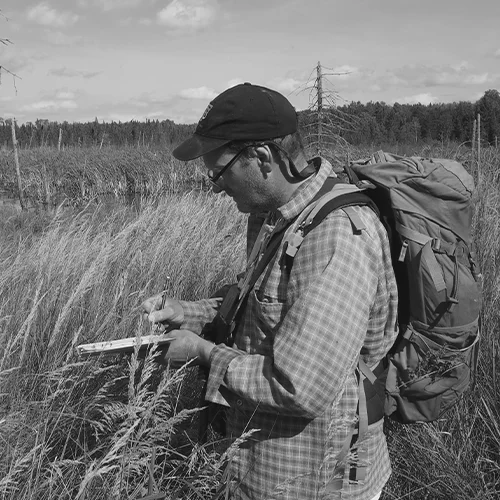
Al Harris
MSc. Senior Ecologist
Al holds a B.Sc. in Wildlife Biology from the University of Guelph and a M.Sc. from Lakehead University. Al is a biologist with over 40 years’ experience in northern Ontario. In 1996, after spending seven years as a biologist with Ontario Ministry of Natural Resources as a caribou and wetland biologist, he co-founded Northern Bioscience, an ecological consulting company based in Thunder Bay, Ontario. Al has conducted life science inventory in over 60 protected areas in northern Ontario, over 30 wetland evaluations, and was Canadian co-lead on wetland monitoring on the Rainy Lake – Namakan system for the International Joint Commission and at Isle Royale National Park. He is a senior author of the Wetland Ecosystem Classification for Northwestern Ontario and co-author of Terrestrial and Wetland Ecosites for Northwestern Ontario and Wetland Plants of Ontario. Al has contributed to environmental assessments for over 30 major industrial projects and 20 Environmental Impact Studies in northern Ontario. He was a member of the Committee on the Status of Species at Risk in Ontario (2008 – 2014) and is currently a member of the Arthropod Specialist Subcommittee of the Committee on the Status of Endangered Wildlife in Canada (COSEWIC).
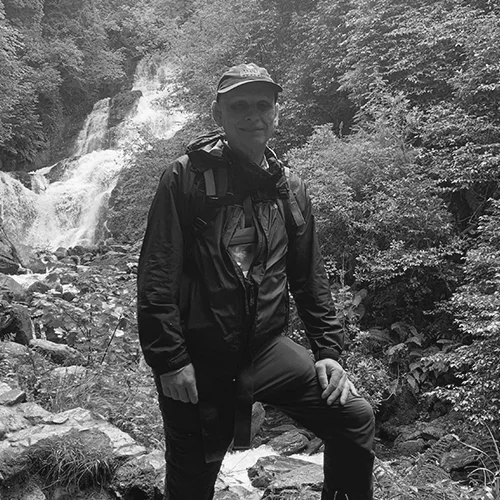
Brian Ratcliff
B.Sc, Senior Biologist
Brian Ratcliff is a wildlife biologist with more than 45 years of experience. Living in Thunder Bay for the past 30 years, Brian has worked as a private consultant on contracts for the Federal Government, Provincial Government, private consulting companies, and NGO’s. Research projects have focused on species at risk such as American White Pelican, Piping Plover, Bald Eagle, Peregrine Falcon, Burrowing Owl and Gray Fox. Brian has been involved with the recovery of Peregrine Falcons in Ontario since 1981.
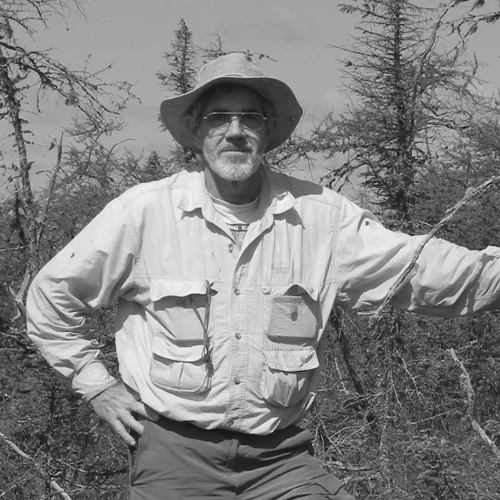
Gerry Racey
MSc. Senior Ecologist
Gerry Racey is a retired ecologist and forest science specialist with the Ontario Ministry of |Natural Resources and Forestry working across disciplines and spanning both terrestrial and wetland ecosystems. He has extensive implementation experience in field program and product development in ecological land classification, caribou ecology, and forestry / wildlife habitat management. He played a key role in coordinating field surveys and assessments of woodland caribou across their range including in the Far North of Ontario and in contributed to both policy and management guidance. A major emphasis was on training and technology transfer through the development and implementation of practical management tools for understanding the land: such as the Wetland Ecosystem Classification for Northwestern Ontario, Terrestrial and Wetland Ecosites of Northwestern Ontario, Northwestern Ontario Forest Ecosystem Interpretations, Wetland Plants of Ontario). More recently he has been engaged in developing Species at Risk mitigation plans for mineral exploration and other developments. His interdisciplinary approach has spanned the management challenges associated with forest inventory, silviculture, wildlife habitat, fire ecology, wetland conservation and caribou ecology and conservation.
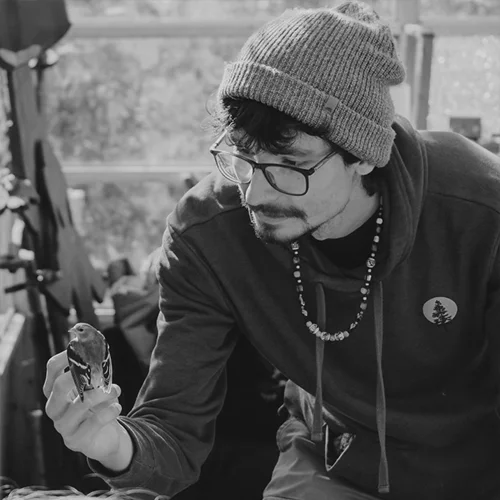
Brady Mills
H. BSc. (pending): Avian Biologist
Brady Mills is a current student at Lakehead University, completing his Bachelor of Science in Biodiversity and Conservation Biology. During the field season, Brady applies his passion and expertise in ornithology to complete breeding bird surveys and acoustic interpretation at Aspen Biological Ltd and during the off-season, he serves as an assistant bird bander at the McKellar Island Bird Observatory in Thunder Bay, where he contributes to raising initiatives and raises awareness regarding the importance of bird conservation.

Emily Palahnuk
H.BSc Biologist
Emily Palahnuk graduated from Lakehead University with an Honours Bachelor of Science in Biodiversity and Conservation Biology. Born and raised just outside of Thunder Bay, Ontario, Emily is very familiar with the boreal ecosystem and its components. She has a widespread interest in biology and the environment as a whole, but particularly specializes in birds, aquatic macroinvertebrates, freshwater fish, and flowering plants. She is the Floral Illustrator for the Claude E. Garton Herbarium at Lakehead University and the lab manual illustrator for the Flowering Plant Taxonomy course. Emily worked as an Assistant Fisheries Technician for the MNR in 2024 and previously had three years of experience in data and records management for her local municipality, as well as volunteer experience surrounding bird banding, invasive species management, and environmental cleanup. During her time as a fisheries technician, Emily has contributed to broad-scale monitoring, community index netting, electrofishing, aquatic invasive species monitoring, and telemetry tagging. As well, Emily is very involved in citizen science, regularly contributing data to iNaturalist, eBird, and Project Feederwatch.
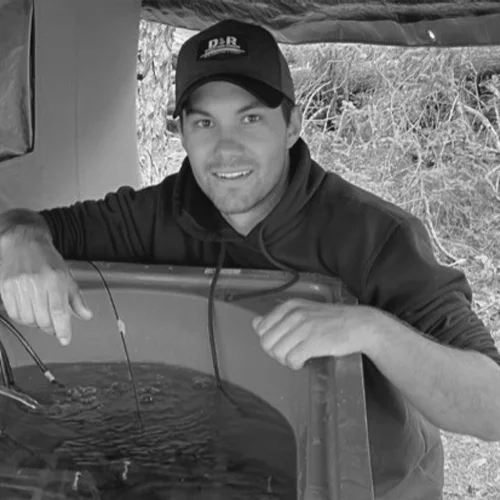
Cody Veneruzzo
PhD candidate: Aquatic Ecologist
Cody is a PhD candidate in the Community Ecology and Energetics Lab (CEE Lab) at Lakehead University. He is investigating the impacts of microplastic exposure on fish within in-lake mesocosms and throughout a whole-lake addition at the IISD-Experimental Lakes Area (IISD-ELA; pELAstic Project). He is primarily assessing whether microplastics impact fish metabolism through in-situ intermittent-flow respirometry and determining whether growth rates and activity rates change using bioenergetics modelling and stable isotope analysis.
Beyond the scope of his PhD, Cody has contributed to routine fisheries monitoring at IISD-ELA, leading the netting, processing, and sampling efforts on the main long-term ecological research (LTER) reference lake. He has experience conducting non-lethal sampling efforts in the field, including, fin ray collection for ageing assignment, gastric lavage for diet analysis, and mucus swabs for stress biomarker identification. In the laboratory, Cody has experience dissecting fish for all manner of tissue and organ collection, conducting bomb calorimetry for energy density analysis, running samples for direct mercury analysis, and assigning estimates and confidence levels to various ageing structures. He has conducted statistical analyses and disseminated results across a variety of environmental parameters and experimental studies.
Joan LeBlanc
Accountant/Office Administrator
Joan LeBlanc holds 3rd Year CGA from CGA institution and has over 25 years of experience as an accountant and bookkeeper. Joan oversees Aspen’s payroll, tax accounting, and financial reporting. She is a valued team member with a high attention to detail and organizational skills.
Stephanie Prokop
J.D. Policy Advisor
Bringing a unique perspective to Aspen Biological Ltd., Stephanie holds a Juris Doctor from the Bora Laskin Faculty of Law and is currently completing a Master’s in Law at the University of Ottawa, specializing in federal and provincial regulatory processes. With a strong commitment to delivering structured, impactful solutions, Stephanie leverages her extensive background in law and policy alongside expertise in regulatory processes and compliance.
Her research in regulatory governance provides Aspen Biologica Ltd. with valuable insights into the complexities of provincial and federal frameworks. Stephanie contributes to the organization through comprehensive regulatory research, strategic guidance, and the development and implementation of company policies. Her dedication to addressing critical challenges and fostering innovative practices aligns seamlessly with Aspen Biological’s mission to advance sustainable and ethical solutions.